
 0086-20-3156-0779
0086-20-3156-0779
0086-20-3156-0779



In March 2025, Manus—an AI agent developed by a scrappy garage team in China—emerged as a symbol of grassroots innovation in a field dominated by tech giants. Founded by CEO Xiao Hong (a WeChat ecosystem veteran), Chief Scientist Ji Yichao (creator of the pre-LLM Magi search engine), and Product Partner Zhang Tao (a 10-company polymath), Manus blends SaaS pragmatism, reinforcement learning, and minimalist product design. Their journey, backed by ZhenFund, highlights China's booming AI talent ecosystem, where Shenzhen AI talents recruiting firms and China recruitment agencies for AI talents play pivotal roles in bridging skill gaps. From Xiao's million-dollar ChatGPT plugin gamble to Ji's open-sourced models and Zhang's “PPD metric” for lean AI development, Manus exemplifies how underdog teams leverage localized expertise and China headhunters specializing in the AI industry to compete globally. As the AI application era accelerates, Manus'story underscores the power of cross-disciplinary collaboration and China's evolving role in shaping AI's future.
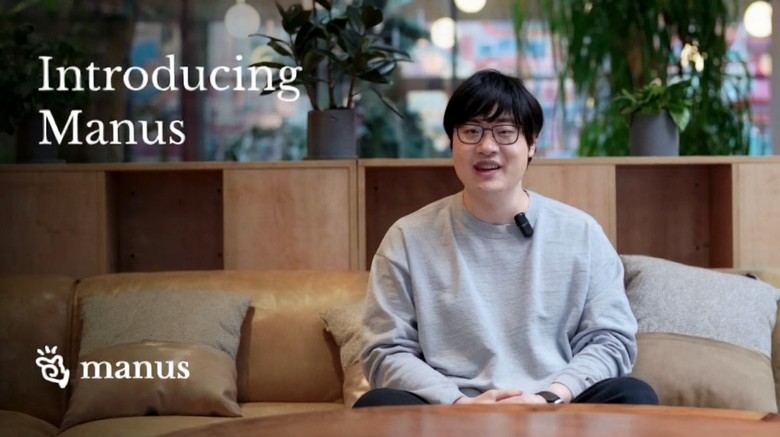
Manus, an AI-powered agent product, has captured industry attention with its unconventional origin story. The trio behind its development—CEO Xiao Hong (30s), Chief Scientist Ji Yichao (Peak, 20s), and Product Partner Zhang Tao (HideCloud, 30s)—epitomize China's emerging AI talent pool: two serial entrepreneurs and a veteran who pivoted across 10 companies in 15 years.

Operating from a garage, this "underdog" team has disrupted expectations. "Hardtech founders often hail from elite backgrounds, while consumer product builders emerge from grassroots," noted Liu Yuan, a ZhenFund investor and Manus' angel backer. Xiao, a Huazhong University of Science and Technology graduate, cut his teeth in Wuhan developing WeChat plugins like Yiban (a public account editor) and Weiban (CRM tool), later sold to a unicorn. Ji, a Beijing native, coded his first app at 16 and launched the Mammoth Browser before pioneering Magi, a pre-LLM knowledge graph search engine. Zhang, a Chongqing University alumnus, navigated roles at Tencent, ByteDance, and Lightyear, blending ToB and ToC expertise.

The founders' paths converged in 2024 with ZhenFund's matchmaking. Xiao's prior venture, Monica—a profitable AI plugin—caught the eye of a tech giant's founder during a Hong Kong meeting, though he opted for independence. Today, Manus leverages their combined strengths: Xiao's SaaS pragmatism, Ji's reinforcement learning models, and Zhang's "PPD metric" (PM-to-Prompt Distance), a framework for minimizing bureaucracy in AI development.

Behind such innovation lies China's booming AI talent ecosystem. Shenzhen AI talents recruiting firms like Henderson Executive and SunTzu Recruit have become critical allies for AI startups, bridging gaps in specialized roles. Meanwhile, China recruitment agencies for AI talents report surging demand for cross-disciplinary experts—a trend amplified by Manus' rise.

Xiao's journey mirrors China's tech evolution. After selling his WeChat CRM venture for nine figures in 2020, he doubled down on AI tools. When ChatGPT disrupted the market, he spent millions acquiring ChatGPT for Google to accelerate Monica's growth—a move critics dismissed as "shell engineering." Yet Monica's profitability proved skeptics wrong.

Ji's path diverged: Magi, his 2019 search engine, peaked at 3M users before GPT-3 rendered its knowledge graphs obsolete. Undeterred, he open-sourced reinforcement learning models that now power Manus' "long-horizon thinking" capabilities. "Leave future ideas to Manus," he quipped.
Zhang, the team's tenth-career polymath, bridges theory and practice. His 2017 experiment with TensorFlow-trained gaming AI at INKE foreshadowed today's vision: "Mastering machine learning separates elite PMs from the rest."





 How China Recruitment Agencies Fuel Its $53B Cloud & AI Ambitions